


Japanese-speaking? 20 Dubai real estate agents - Review ranking
A must-see for anyone interested in Dubai real estate investment! You'll understand everything!
When considering investing in Dubai real estate, the first major hurdle that many people face is the language barrier. In this context, finding a real estate company that can speak Japanese and is truly trustworthy is an extremely important point.
First of all, what kind of people come to Dubai to get involved in the real estate industry? And should you really own a property in Dubai?
Many people have such questions and concerns. We wanted to provide information that is as clear and concise as possible to answer these questions, so we launched a comprehensive review site for Dubai real estate. We have compiled a ranking that focuses on the question: Is a company trustworthy just because it can speak Japanese? We will continue to gradually improve the content, so we hope that you will use this site to gather information about Dubai real estate and Dubai with confidence, and that it will help you smoothly find your ideal property. Please make use of the Dubai real estate review rankings.
Search for Dubai real estate agents (brokerage)
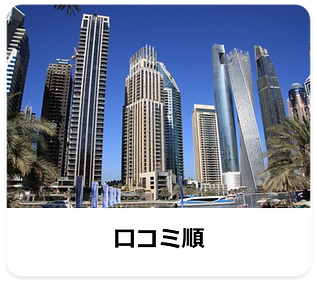

What is Dubai like?
I'll be honest about the negative aspects of Dubai real estate, but to conclude, it's true that Dubai real estate is profitable. However, this is no longer the era in which foreigners who don't know the rules can easily make money; rather, it means that the market has normalized and we've entered a stage where only those who truly understand the market can make a profit. The term "off-plan" always comes up when discussing Dubai real estate, but the reality is that many people enter the market without understanding whether it's a purchasing method or an investment product. Off-plan means purchasing an unfinished new property, with completion expected in three to four years, in installments based on a predetermined payment schedule. This is a highly speculative system. The most important thing to note is that, in principle, if you fail to complete your payments, you will not get any of your investment back. Salesmen will tell you that your funds are safe because they're managed in a government escrow account, but in reality, you'll only get a refund if the developer goes bankrupt or flees mid-construction, and even then, not all of it. For example, if construction is 50% complete and the buyer has also paid 50%, you won't get a refund. There are no refunds for mid-term terminations or cancellations, and since many developers are state-owned or government-affiliated, the explanation that the money is held in an escrow account is practically meaningless. While it is common to purchase real estate using a mortgage in Japan, bank loans are generally unavailable for unfinished properties in Dubai, even for new buildings being built by state-owned enterprises. This is due to the large number of projects that stalled mid-construction during the past Dubai shock, and the fact that 90% of the population is foreign, and there is a constant risk that they will flee to their home countries if they become unable to pay. Many people have seen photos of Ferraris and luxury cars abandoned at Dubai Airport, but those are the remains of people who have defaulted on their debts and fled the country. This is the reality of Dubai, which can only be understood by living there for a few years. Given this background, it is clear how risky investing in unfinished properties is. For these reasons, off-plan purchases, which involve paying off the property in around 10 installments until completion, are the norm in Dubai, instead of bank loans. While some lump-sum purchases offer discounts, this approach is rarely adopted due to the lack of trust in unfinished properties, and even banks are reluctant to lend money. Furthermore, because it's possible to resell properties before completion for profit, many gambling-minded resale investors entered the market, heating up the real estate market. However, during the COVID-19 pandemic, real estate prices effectively halved in many cases, revealing the speculative and fragile nature of Dubai real estate. Meanwhile, real estate prices in Tokyo continued to rise, driven by the influx of foreign capital. In Japan, tax evasion is less likely to be pursued abroad, creating completely different conditions than for Japanese investors. The biggest advantage for Japanese investors investing in Dubai real estate is actually the tax system. Returning to the topic at hand, many off-plan buyers enter into contracts without the full amount in hand. While this money-game-like investment of reselling before the funds run out was previously viable, the current environment no longer allows for selling properties for more than the purchase price. The days when Dubai real estate was a profitable venture are over. Prices, which fell by half during the COVID-19 pandemic, have now soared to levels far above pre-pandemic levels, necessitating careful purchases. This is because if you are unable to resell your property before the funds run out and your payments fall behind, all payments made up to that point will be confiscated and you won't get a single yen back. While some grace periods are offered, this remains a highly risky arrangement. While off-plan payment plans vary slightly from property to property, they generally require around 10 installments until completion. Once 30% of the property price is paid, the property becomes eligible for resale to a third party. While at first glance this may seem like a buyer-friendly installment plan, in reality, making 10 installments over three to four years for a property worth over 100 million yen is no small burden. This is due to the unique circumstances of Dubai, where banks do not provide loans for new construction. Let's take a step-by-step look at why these payment plans exist.

Japanese-speaking? Dubai Real Estate Review Ranking of 20 Companies


Rankings below 11 are for the mobile version.

Dubai Real Estate Review Ranking
What is

Adopting flat and fair evaluation criteria

Managerial Qualities
Reviews
Company Achievements
Developer reviews
Current Agents' Ratings
Journalist Information
Dubai real estate's distinctive investment style
I'll be honest about the negative aspects of Dubai real estate, but to conclude, it's true that Dubai real estate is profitable. However, this is no longer the era in which foreigners who don't know the rules can easily make money; rather, it means that the market has normalized and we've entered a stage where only those who truly understand the market can make a profit. The term "off-plan" always comes up when discussing Dubai real estate, but the reality is that many people enter the market without understanding whether it's a purchasing method or an investment product. Off-plan means purchasing an unfinished new property, with completion expected in three to four years, in installments based on a predetermined payment schedule. This is a highly speculative system. The most important thing to note is that, in principle, if you fail to complete your payments, you will not get any of your investment back. Salesmen will tell you that your funds are safe because they're managed in a government escrow account, but in reality, you'll only get a refund if the developer goes bankrupt or flees mid-construction, and even then, not all of it. For example, if construction is 50% complete and the buyer has also paid 50%, you won't get a refund. There are no refunds for mid-term terminations or cancellations, and since many developers are state-owned or government-affiliated, the explanation that the money is held in an escrow account is practically meaningless. While it is common to purchase real estate using a mortgage in Japan, bank loans are generally unavailable for unfinished properties in Dubai, even for new buildings being built by state-owned enterprises. This is due to the large number of projects that stalled mid-construction during the past Dubai shock, and the fact that 90% of the population is foreign, and there is a constant risk that they will flee to their home countries if they become unable to pay. Many people have seen photos of Ferraris and luxury cars abandoned at Dubai Airport, but those are the remains of people who have defaulted on their debts and fled the country. This is the reality of Dubai, which can only be understood by living there for a few years. Given this background, it is clear how risky investing in unfinished properties is. For these reasons, off-plan purchases, which involve paying off the property in around 10 installments until completion, are the norm in Dubai, instead of bank loans. While some lump-sum purchases offer discounts, this approach is rarely adopted due to the lack of trust in unfinished properties, and even banks are reluctant to lend money. Furthermore, because it's possible to resell properties before completion for profit, many gambling-minded resale investors entered the market, heating up the real estate market. However, during the COVID-19 pandemic, real estate prices effectively halved in many cases, revealing the speculative and fragile nature of Dubai real estate. Meanwhile, real estate prices in Tokyo continued to rise, driven by the influx of foreign capital. In Japan, tax evasion is less likely to be pursued abroad, creating completely different conditions than for Japanese investors. The biggest advantage for Japanese investors investing in Dubai real estate is actually the tax system. Returning to the topic at hand, many off-plan buyers enter into contracts without the full amount in hand. While this money-game-like investment of reselling before the funds run out was previously viable, the current environment no longer allows for selling properties for more than the purchase price. The days when Dubai real estate was a profitable venture are over. Prices, which fell by half during the COVID-19 pandemic, have now soared to levels far above pre-pandemic levels, necessitating careful purchases. This is because if you are unable to resell your property before the funds run out and your payments fall behind, all payments made up to that point will be confiscated and you won't get a single yen back. While some grace periods are offered, this remains a highly risky arrangement. While off-plan payment plans vary slightly from property to property, they generally require around 10 installments until completion. Once 30% of the property price is paid, the property becomes eligible for resale to a third party. While at first glance this may seem like a buyer-friendly installment plan, in reality, making 10 installments over three to four years for a property worth over 100 million yen is no small burden. This is due to the unique circumstances of Dubai, where banks do not provide loans for new construction. Let's take a step-by-step look at why these payment plans exist.

01.
As a developer's sales strategy
Foreigners who do not have an Emirates ID or a stable income in the UAE cannot access bank loans in Dubai. In other words, for many foreigners, buying real estate in Dubai begins with the assumption that they cannot access loans. Based on this reality, developers designed the currently mainstream off-plan installment payment system to sell properties to more foreigners. Purchasing pre-owned or completed properties requires a VISA and Emirates ID, making it difficult for foreigners, including Japanese residents, to purchase them. For this reason, unscrupulous agents often fail to fully explain this point and promote only off-plan options for first-time buyers. Purchasing an off-plan property allows you to obtain a Golden Visa, after which they will suggest a completed property. However, a conscientious company should clearly explain how to access bank loans whenever possible and how to prepare for them. Purchasing a completed property from the get-go requires a VISA or Emirates ID, which requires going through procedures such as establishing a new corporation or purchasing an existing corporation and obtaining a VISA or Emirates ID in that corporation's name, making it a fairly difficult hurdle in reality. While it's possible to obtain a VISA or Emirates ID through employment, either approach is not easy. As a result, many foreigners who are unable to purchase completed properties are left with no choice but to purchase off-plan properties, which has led to a structure in which off-plan properties are strongly recommended. The current unique off-plan market, where developers are focused on selling off-plan properties to as many foreigners as possible, has formed as a result of developers' intense efforts to sell off-plan properties to as many foreigners as possible. It's also true that purchasing Dubai real estate with a loan offers unique benefits for Japanese people, such as the possibility of obtaining a loan as a brand new borrower even if you have a full credit limit or a bad credit history in Japan, and that defaulting on repayments in Dubai will not affect your credit rating in Japan. For more detailed information on bank loans and purchasing methods, please feel free to contact us via LINE@.
02.
The reality of off-plan investing
As this agent explained, if you invest in one property, it's certainly possible that a property worth ¥80 million could become worth ¥120 million upon completion four years from now. However, the story changes if you split your investment in two and leverage two properties. In this case, you're assuming a sale two years into the project, but there's no guarantee that prices will have risen as expected by that point. While the government publishes past sales data and often explains that "price increases have occurred in the past," the reality is that this trend is not necessarily reproducible under the same conditions. While some may say, "This property is so popular it sells out in a day, so it's sure to sell in the future," no one can accurately predict what the market will be like two years from now. And it's actually banks that make decisions based on such uncertainty. A critical analysis of off-plan property price trends reveals that in the current market, prices tend to rise as the property approaches completion. It's more realistic to assume that price increases are limited within the first two years of sales, making it difficult to realize significant profits. As a result, it is no exaggeration to say that the success of off-plan investment depends almost entirely on how cheaply you can purchase. If you would like more information on specific properties, please feel free to contact us via LINE@.


Real estate brokerage commission business
03.
Another important aspect of off-plan investing is the influence of real estate agents' commission business. By encouraging diversification, agents can increase the number of properties for sale and maximize their commission income. In fact, there are several real estate companies that have earned over 100 billion yen in commission income over the past 10 years, demonstrating how the off-plan market has expanded primarily through agents. Therefore, when purchasing an off-plan property, it is extremely important to assess not only the property itself, but also the agent's character and integrity, as well as their ability to sell the property at an appropriate price in the future. Rather than blindly accepting the opinion of just one company, we recommend building relationships with at least three reputable real estate companies and agents with a proven track record in both buying and selling, and comparing their results before making a decision. We also offer individual advice on choosing a real estate company that best suits your situation and goals. If you need an introduction, please feel free to contact us via LINE@.
04.
Challenges in the off-plan resale market
This system inevitably results in a large number of investors purchasing off-plan properties, but structurally there are fewer buyers in the so-called off-plan resale market, where partially completed off-plan properties are resold. The reason for this lies in the revenue structure of real estate agents. For new off-plan sales, real estate agents receive very high commissions of roughly 4-10%, but for partially completed off-plan resale properties, the commission is only around 2%. This large difference in commissions gives real estate agents an incentive to prioritize the sale of new off-plan properties, and as a result, the partially completed off-plan resale market is less likely to be actively handled, creating a situation that is structurally sluggish.

In the end...
Agents tend to blatantly steer their clients toward off-plan deals that allow them to earn higher commissions. As a result, the completed property market and resale market have inevitably cooled, with off-plan deals accounting for approximately 70% of transactions in 2024. Given this market structure, when investing in real estate in Dubai, it is extremely important to consider not only the quality of the property itself, but also to choose a real estate company or agent that takes the sale seriously and prioritizes the buyer's interests, even in transactions with low brokerage fees. Ultimately, the success or failure of your Dubai real estate investment depends largely on whether you can find a trustworthy agent who will respond without bias even during the selling phase.
The reality of real estate agents in Dubai
05.
I'll be honest about the negative aspects of Dubai real estate, but to conclude, it's true that Dubai real estate is profitable. However, this is no longer the era in which foreigners who don't know the rules can easily make money; rather, it means that the market has normalized and we've entered a stage where only those who truly understand the market can make a profit. The term "off-plan" always comes up when discussing Dubai real estate, but the reality is that many people enter the market without understanding whether it's a purchasing method or an investment product. Off-plan means purchasing an unfinished new property, with completion expected in three to four years, in installments based on a predetermined payment schedule. This is a highly speculative system. The most important thing to note is that, in principle, if you fail to complete your payments, you will not get any of your investment back. Salesmen will tell you that your funds are safe because they're managed in a government escrow account, but in reality, you'll only get a refund if the developer goes bankrupt or flees mid-construction, and even then, not all of it. For example, if construction is 50% complete and the buyer has also paid 50%, you won't get a refund. There are no refunds for mid-term terminations or cancellations, and since many developers are state-owned or government-affiliated, the explanation that the money is held in an escrow account is practically meaningless. While it is common to purchase real estate using a mortgage in Japan, bank loans are generally unavailable for unfinished properties in Dubai, even for new buildings being built by state-owned enterprises. This is due to the large number of projects that stalled mid-construction during the past Dubai shock, and the fact that 90% of the population is foreign, and there is a constant risk that they will flee to their home countries if they become unable to pay. Many people have seen photos of Ferraris and luxury cars abandoned at Dubai Airport, but those are the remains of people who have defaulted on their debts and fled the country. This is the reality of Dubai, which can only be understood by living there for a few years. Given this background, it is clear how risky investing in unfinished properties is. For these reasons, off-plan purchases, which involve paying off the property in around 10 installments until completion, are the norm in Dubai, instead of bank loans. While some lump-sum purchases offer discounts, this approach is rarely adopted due to the lack of trust in unfinished properties, and even banks are reluctant to lend money. Furthermore, because it's possible to resell properties before completion for profit, many gambling-minded resale investors entered the market, heating up the real estate market. However, during the COVID-19 pandemic, real estate prices effectively halved in many cases, revealing the speculative and fragile nature of Dubai real estate. Meanwhile, real estate prices in Tokyo continued to rise, driven by the influx of foreign capital. In Japan, tax evasion is less likely to be pursued abroad, creating completely different conditions than for Japanese investors. The biggest advantage for Japanese investors investing in Dubai real estate is actually the tax system. Returning to the topic at hand, many off-plan buyers enter into contracts without the full amount in hand. While this money-game-like investment of reselling before the funds run out was previously viable, the current environment no longer allows for selling properties for more than the purchase price. The days when Dubai real estate was a profitable venture are over. Prices, which fell by half during the COVID-19 pandemic, have now soared to levels far above pre-pandemic levels, necessitating careful purchases. This is because if you are unable to resell your property before the funds run out and your payments fall behind, all payments made up to that point will be confiscated and you won't get a single yen back. While some grace periods are offered, this remains a highly risky arrangement. While off-plan payment plans vary slightly from property to property, they generally require around 10 installments until completion. Once 30% of the property price is paid, the property becomes eligible for resale to a third party. While at first glance this may seem like a buyer-friendly installment plan, in reality, making 10 installments over three to four years for a property worth over 100 million yen is no small burden. This is due to the unique circumstances of Dubai, where banks do not provide loans for new construction. Let's take a step-by-step look at why these payment plans exist.
summary
I'll be honest about the negative aspects of Dubai real estate, but to conclude, it's true that Dubai real estate is profitable. However, this is no longer the era in which foreigners who don't know the rules can easily make money; rather, it means that the market has normalized and we've entered a stage where only those who truly understand the market can make a profit. The term "off-plan" always comes up when discussing Dubai real estate, but the reality is that many people enter the market without understanding whether it's a purchasing method or an investment product. Off-plan means purchasing an unfinished new property, with completion expected in three to four years, in installments based on a predetermined payment schedule. This is a highly speculative system. The most important thing to note is that, in principle, if you fail to complete your payments, you will not get any of your investment back. Salesmen will tell you that your funds are safe because they're managed in a government escrow account, but in reality, you'll only get a refund if the developer goes bankrupt or flees mid-construction, and even then, not all of it. For example, if construction is 50% complete and the buyer has also paid 50%, you won't get a refund. There are no refunds for mid-term terminations or cancellations, and since many developers are state-owned or government-affiliated, the explanation that the money is held in an escrow account is practically meaningless. While it is common to purchase real estate using a mortgage in Japan, bank loans are generally unavailable for unfinished properties in Dubai, even for new buildings being built by state-owned enterprises. This is due to the large number of projects that stalled mid-construction during the past Dubai shock, and the fact that 90% of the population is foreign, and there is a constant risk that they will flee to their home countries if they become unable to pay. Many people have seen photos of Ferraris and luxury cars abandoned at Dubai Airport, but those are the remains of people who have defaulted on their debts and fled the country. This is the reality of Dubai, which can only be understood by living there for a few years. Given this background, it is clear how risky investing in unfinished properties is. For these reasons, off-plan purchases, which involve paying off the property in around 10 installments until completion, are the norm in Dubai, instead of bank loans. While some lump-sum purchases offer discounts, this approach is rarely adopted due to the lack of trust in unfinished properties, and even banks are reluctant to lend money. Furthermore, because it's possible to resell properties before completion for profit, many gambling-minded resale investors entered the market, heating up the real estate market. However, during the COVID-19 pandemic, real estate prices effectively halved in many cases, revealing the speculative and fragile nature of Dubai real estate. Meanwhile, real estate prices in Tokyo continued to rise, driven by the influx of foreign capital. In Japan, tax evasion is less likely to be pursued abroad, creating completely different conditions than for Japanese investors. The biggest advantage for Japanese investors investing in Dubai real estate is actually the tax system. Returning to the topic at hand, many off-plan buyers enter into contracts without the full amount in hand. While this money-game-like investment of reselling before the funds run out was previously viable, the current environment no longer allows for selling properties for more than the purchase price. The days when Dubai real estate was a profitable venture are over. Prices, which fell by half during the COVID-19 pandemic, have now soared to levels far above pre-pandemic levels, necessitating careful purchases. This is because if you are unable to resell your property before the funds run out and your payments fall behind, all payments made up to that point will be confiscated and you won't get a single yen back. While some grace periods are offered, this remains a highly risky arrangement. While off-plan payment plans vary slightly from property to property, they generally require around 10 installments until completion. Once 30% of the property price is paid, the property becomes eligible for resale to a third party. While at first glance this may seem like a buyer-friendly installment plan, in reality, making 10 installments over three to four years for a property worth over 100 million yen is no small burden. This is due to the unique circumstances of Dubai, where banks do not provide loans for new construction. Let's take a step-by-step look at why these payment plans exist.

Dubai Real Estate Review Ranking
JAPAN OFFICE
〒150-0043
Shibuya Dogenzaka Tokyu Building 2F-C, 1-10-8 Dogenzaka, Shibuya-ku, Tokyo
[Editor's Information]
Name: Akifumi Oki
Main experience: Utilizing his experience working at the Dubai branch of a major newspaper in the UAE for three years, he is currently working as an editor for the Dubai Real Estate Review Rankings.
Editor: Akifumi Oki

